Small cars



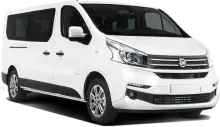


Choose the right car for your trip in Amami O Shima, Japan and book in minutes. Compare trusted rental options, find great daily rates, and secure convenient airport pick-up for your travel dates.
Welcome to Amami O Shima Island! Renting a car is a great way to explore this beautiful Japanese island, but knowing about pickup, paperwork, costs, and local traffic rules can help make your trip smoother. In this guide, you’ll find all the important information you need for car rental at Amami Airport (ASJ).
Car rental company offices are usually located inside or near the airport terminal. They are often grouped in a central location and easily accessible after baggage claim. Most rental companies provide a free transfer between their office and the airport terminal if the office is not directly within the terminal.
Several international and local car rental companies are represented at Amami Airport. Common players include rental companies that offer a wide range of vehicles from economy cars to luxury cars. It is worth comparing prices and conditions in advance to find the best deal.
The most popular car rental categories on Amami O Shima Island are:
| Car Class | Daily Price (EUR, approx.) |
|---|---|
| Economy | 25 - 40 |
| Compact | 35 - 50 |
| Mid-size | 45 - 65 |
| SUV | 60 - 90 |
| Luxury | 100+ |
The above prices are indicative and may vary depending on seasonal changes and availability.
To rent a car, you generally need the following documents: a valid driver's license (an international driver's license is recommended), identification (passport), and a credit card to deposit the security deposit. Most rental companies require a minimum age of 21, but higher age limits may apply for certain car classes. The amount of the security deposit varies depending on the rental company and the car class.
Rental companies generally offer various insurance packages. CDW (Collision Damage Waiver) covers collision damage, and Theft Protection covers damage from theft or burglary. It is worth finding out about the insurance conditions, including the excess, and considering which package suits your needs. Ask the rental company if your own insurance covers the rental car.
In Japan, traffic flows on the left side of the road. Speed limits are generally lower than in Europe. Most highways are toll roads, and payment is made in cash or electronically. Parking in cities can be expensive, and parking garages are often used. It is important to follow local traffic rules and drive carefully.
Recommended, but not always mandatory. It is worth checking the requirements with the rental company.
Generally credit card, rarely cash.
Varies depending on the rental company and car class, usually several hundred euros.
Stop immediately, notify the police and the rental company, and fill out the accident report.
Most highways are toll roads, payment is made in cash or electronically.
Parking garages are often used in cities, parking can be expensive.
CDW (Collision Damage Waiver) and Theft Protection are the most common, but additional packages are also available.
The maximum amount you will pay in the event of an accident.
The car is usually returned at the airport or at the rental company's office.
Yes, but it usually involves an extra cost.
Notify the rental company as soon as possible, as delay may result in automatic cancellation of the reservation.