Small cars
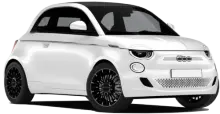
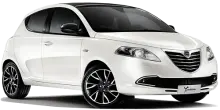

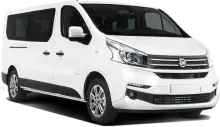

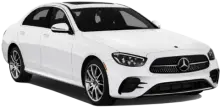
Choose the right car for your trip in Munich, Germany and book in minutes. Compare trusted rental options, find great daily rates, and secure convenient airport pick-up for your travel dates.
Welcome to Augsburg Airport! Renting a car is a great way to explore the area, but knowing about pickup, paperwork, costs, and local traffic rules can help make your trip smoother. This guide contains all the important information you need for car rental at AGB.
Car rental offices are usually located inside or near the airport terminals. They are often grouped in a central location and easily accessible from the airport by transfer or a short walk. It is worth checking the airport's website or the information desk upon arrival to find out exactly where the offices are located.
Numerous international and local car rental companies operate at Augsburg Airport. The most common include Sixt, Europcar, Avis, Hertz and Budget. The range may vary, so it is worth checking the companies' websites in advance.
The ideal car choice depends on your travel plans. In and around Augsburg and Germany in general, the following categories are popular:
| Category | Daily price (EUR, estimate) |
| Economy | 25 - 40 |
| Compact | 35 - 50 |
| Intermediate | 45 - 65 |
| SUV | 60 - 90 |
| Luxury | 100+ |
Prices vary seasonally and depending on availability.
You generally need the following documents to rent a car: a valid driver's license, identification (passport or ID card), and a credit card. Most car rental companies offer car rentals from a minimum age of 21, but higher age limits may apply for certain categories. A deposit is usually requested on your credit card at the time of booking and pickup, the amount of which depends on the selected car. Most places accept credit card payments, but it is worth checking the possible payment methods in advance.
Car rental companies generally offer a variety of insurance options. CDW (Collision Damage Waiver) covers damage to the car, while Theft Protection covers damage caused by theft or burglary. Excess Insurance reduces the amount of the deductible. It is worth carefully reviewing the insurance terms and asking the car rental agent if anything is unclear.
In Germany, highways often have no speed limits, but it is recommended to adjust to the conditions. The speed limit in cities is generally 50 km/h, and outside built-up areas it is 100 km/h. A toll (vignette) is often required to travel on highways, which can be purchased at border crossings or gas stations. Parking in cities is often paid, and you need to pay attention to parking regulations.
If you have an EU driving license, it is usually sufficient. Those arriving from other countries should inquire.
The deposit amount depends on the car, but generally ranges from 500-1500 EUR.
Most car rental companies offer GPS for rent, or you can use a smartphone navigation app.
Immediately notify the police and the car rental company. Request an accident report.
The car must be returned at the specified location and time. Make sure all your personal belongings are in it.
Generally credit card, rarely cash.
Some contracts limit kilometers, but many offer unlimited mileage.
CDW covers damage to the car, but generally does not cover tires or the chassis.
The additional driver must be reported to the car rental company, and an additional fee usually applies.
You usually get the car with a full tank and have to return it with a full tank.
Gas stations can be found almost everywhere in cities and on highways.
Many highways in Germany have no speed limits, but always pay attention to traffic and conditions.