Small cars

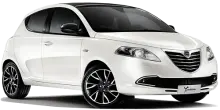
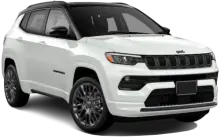
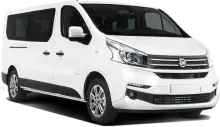
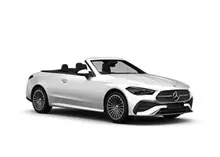
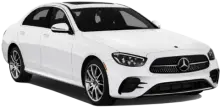
Choose the right car for your trip in Tefe, Brazil and book in minutes. Compare trusted rental options, find great daily rates, and secure convenient airport pick-up for your travel dates.
Welcome to Tefe! Renting a car is a great way to explore the area, but knowing about pickup, paperwork, costs, and local traffic rules can help make your trip smoother. In this article, you’ll find all the important information you need for car rental at Tefe Airport (TFF).
At Tefe Airport, car rental companies are usually located near the baggage claim area or at the airport building exits. Most companies have a counter in the arrivals hall where you can make a reservation or pick up a vehicle already booked in advance. If you can't find the counter, ask an airport employee.
Several international and local car rental companies operate at Tefe Airport. The most common include Avis, Budget, Localiza, and Unidas. It is worth comparing prices and conditions before making a decision.
The choice depends on your personal needs and planned travel. Here are some popular categories:
| Category | Daily price (EUR, estimate) |
| Economy | 25 - 40 |
| Compact | 30 - 50 |
| Mid-size | 40 - 60 |
| SUV | 60 - 100+ |
| Luxury | 100+ |
Prices vary seasonally and depending on availability.
Most car rental companies require you to be at least 21 years old and have a valid driver's license and identification (passport or driver's license). An international driving permit may be recommended. A credit card is usually required for the rental, on which the deposit amount (depending on the value of the vehicle) will be reserved. Debit cards may be accepted, but this is not possible everywhere. The deposit will be refunded after the vehicle is returned undamaged.
It is important to understand the insurance options. CDW (Collision Damage Waiver) covers collision damage, Theft Protection covers damage from theft or burglary. Excess (deductible) is the amount you would pay in the event of damage, even if you have CDW. It is worth asking the rental company what insurance packages they offer and which one suits your needs. Additional insurance, such as personal accident insurance, is also available.
In Brazil, you must drive on the right side of the road. Speed limits are generally 110-120 km/h on highways and 60-80 km/h in cities. Toll sections are common on highways, so it is advisable to carry cash or a credit card. Parking in cities can sometimes be difficult, and you need to use paid parking lots. Traffic can be heavy in larger cities, so be patient and attentive.
Not necessarily, but it is recommended, especially if your license is not written in Latin characters.
Most major credit cards are accepted, but it is advisable to inquire in advance.
The deposit amount depends on the vehicle category, usually corresponding to the value of the vehicle.
The car must be returned at the location and time specified by the rental company.
Immediately notify the police and the rental company, and fill out the accident report.
Most rental companies offer unlimited mileage, but it is worth checking the conditions.
You can pay for toll roads with cash or a credit card.
You can find paid parking in the city center, and free parking options are available in the suburbs.
Most vehicles use gasoline or ethanol, check near the fuel tank cap.
110-120 km/h on highways, 60-80 km/h in cities.
Yes, but there is usually a surcharge. It is worth agreeing in advance.
A late fee will be charged, the amount of which depends on the rental company.