Small cars



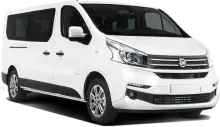


Choose the right car for your trip in San Joaquin, Bolivia and book in minutes. Compare trusted rental options, find great daily rates, and secure convenient airport pick-up for your travel dates.
Renting a car at San Joaquin Airport (SJB) is a great way to explore Bolivia at your own pace. Pickup is usually straightforward, but it's worth being aware of the costs, required documents, and local traffic rules to make the experience as smooth as possible. This guide will help you navigate the intricacies of car rental in San Joaquin.
Car rental company offices are usually located in the airport arrival area or nearby. They are often grouped in a central location, but some companies may have separate offices. Most international car rental companies are present, such as Avis, Budget, Europcar, Hertz and Sixt. It is advisable to find out in advance exactly where the offices are located and whether a transfer is required for pickup.
In San Joaquin and Bolivia in general, you can rent a wide variety of cars, from economy cars to SUVs. The choice depends on your planned trip and road conditions. A small car is ideal for city traffic, while an SUV may be a better choice in mountainous areas or on less developed roads. Popular categories:
| Category | Daily price (EUR, estimate) |
| Economy | 20 - 30 |
| Compact | 25 - 40 |
| Mid-size | 35 - 50 |
| SUV | 50 - 80 |
| Luxury | 80+ |
Prices vary seasonally and depending on availability.
To rent a car, you generally need the following documents: a valid driver's license, identification (passport or ID card) and a credit card. It is important that the driver's license is valid in Bolivia. Most car rental companies require a minimum age of 21, but higher age limits may apply for certain categories. A deposit is usually required at the time of booking and pickup, the amount of which depends on the category of car rented. The deposit is usually deducted from the credit card and returned at the end of the rental period if the car is in undamaged condition.
Car rental companies generally offer a variety of insurance options. CDW (Collision Damage Waiver) covers damage to the car, while Theft Protection covers damage caused by theft or burglary. Excess Insurance reduces the deductible you have to pay in the event of an accident. It is advisable to carefully familiarize yourself with the insurance terms and conditions and consider which insurance package best suits your needs. Ask the car rental agent exactly what damages the insurance covers and in what cases you will have to pay.
Traffic rules in Bolivia may differ from the rules you are used to. Speed limits are generally lower than in Europe. The quality of the roads can vary, so it is advisable to drive carefully, especially in mountainous areas. Traffic jams are common in cities, and parking can be difficult. Most highways in Bolivia are toll roads, so it is advisable to carry cash with you for payment.
It is advisable to bring an international driving permit, but in many cases a valid domestic driving permit is sufficient.
Most car rental companies accept payment in EUR or the local currency (Bolivian boliviano).
Immediately notify the police and the car rental company. Take pictures of the scene and the damage.
Return the car at the specified location and time. Check the return procedure with the car rental company.
Some car rental companies limit the number of miles driven, but many offer unlimited mileage.
Parking in the city center can be difficult. Look for paid parking spaces or permitted free parking spaces.
Most cars run on gasoline or diesel. Check the rental agreement to see which fuel you need to use.
The deposit is usually deducted from your credit card and returned at the end of the rental period if the car is undamaged.
Yes, but you usually have to pay an extra fee for the additional driver.
Immediately notify the car rental company to inform them of your options.
Yes, but one-way rental usually comes with a higher fee.