Small cars

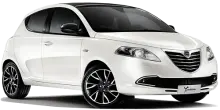

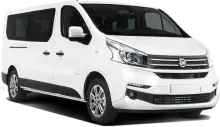


Choose the right car for your trip in Victoria, Chile and book in minutes. Compare trusted rental options, find great daily rates, and secure convenient airport pick-up for your travel dates.
Welcome to Chile! Renting a car is a great way to explore Victoria and the surrounding area, but knowing about pickup, paperwork, costs, and local traffic rules can help make your trip smoother. In this guide, you'll find all the important information you need upon arrival at Victoria Airport (ZIC).
Most car rental offices are located on or near the airport grounds. They are often located after the baggage claim area, or at a location accessible by a short transfer. It is advisable to check the airport's website or the information desk upon arrival to find out exactly where each company is located.
Numerous international and local car rental companies operate at Victoria Airport. The most common include Avis, Budget, Europcar, Hertz, and Localiza. The selection is wide, so you are sure to find a car that meets your needs.
Choosing the right car depends on your travel plans. Here are some popular categories:
| Category | Daily price (EUR, estimate) |
| Economy | 20-30 |
| Compact | 25-40 |
| Mid-size | 35-50 |
| Small SUV | 50-70 |
| Family | 60-90 |
| Luxury | 100+ |
Prices vary seasonally and depending on availability.
Most car rental companies require the following documents: a valid driver's license, identification (passport or ID card) and a credit card. The minimum age is usually 21 or 25, but this may vary depending on the company. Younger drivers may be subject to a surcharge. Payment by credit card is required at the time of booking and pickup, with sufficient funds to cover the deposit and expected costs.
It is important to clarify the insurance terms. Most car rental companies offer basic insurance, but it is worth considering additional insurance. CDW (Collision Damage Waiver) covers collision damage, Theft Protection covers damage from theft or burglary. Excess Insurance reduces the amount of the deductible. Ask the car rental agent which insurance package best suits your needs.
Traffic is generally heavy in cities in Chile, but it is important to observe speed limits on main roads. Speed limits are indicated on signs, but are generally 50 km/h in cities, 80-100 km/h on main roads, and 120 km/h on highways. Most highways require tolls. Parking in cities is often paid and you need to pay attention to parking regulations. It is advisable to familiarize yourself with the latest traffic rules before driving locally.
In most cases, no, if your country's driver's license is accepted in Chile. However, it is advisable to check the regulations of your own country.
Most car rental companies accept credit cards, but some may accept cash. Using a credit card is generally recommended due to the deposit and insurance fees.
The deposit amount depends on the car category and the insurance package. It is usually a multiple of the daily rental rate.
Tolls are required on most highways. Payment can be made in cash or by credit card.
Stop immediately and notify the police. Take pictures of the scene and contact the car rental company.
The car must be returned at the specified location and time. Check with the car rental company for the exact procedure.
Most car rental companies offer unlimited mileage, but it is advisable to check the contract.
Immediately notify the car rental company. Your reservation may be canceled if you are late.
Yes, but a surcharge is usually payable for additional drivers.
Most car rental companies offer GPS for rent. It is advisable to book in advance.
Immediately contact the car rental company and report the problem.