Small cars

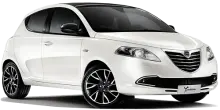

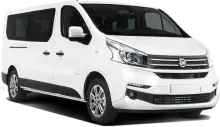


Choose the right car for your trip in Glasgow, United States and book in minutes. Compare trusted rental options, find great daily rates, and secure convenient airport pick-up for your travel dates.
Welcome to Glasgow International Airport! Renting a car is a great way to explore the area, but knowing the pickup process, paperwork, costs, and local traffic rules can help make your trip smoother. In this article, you will find all the important information you need for car rental at GGW.
Car rental company offices are usually located in or near the main airport building. They are often grouped in a central location, with free shuttle services running from the terminals. It is worth checking the airport's website or the information desk upon arrival to find out exactly where the offices are located.
Numerous international and local car rental companies operate at Glasgow International Airport. The most common include Avis, Budget, Hertz, Enterprise, National, and Alamo. The selection is wide, so you are sure to find a car that meets your needs.
The choice depends on many factors, such as the number of passengers, the amount of luggage, and the planned route. Here are some popular car classes:
| Car Class | Daily Price (EUR, approx.) |
|---|---|
| Economy | 25 - 40 |
| Compact | 30 - 50 |
| Mid-size | 40 - 60 |
| SUV | 60 - 100 |
| Luxury | 100+ |
Prices may vary seasonally and depending on availability.
To rent a car, you generally need the following documents: a valid driver's license, identification (passport or driver's license), and a credit card. Most car rental companies accept customers aged 21 or older, but higher age limits may apply to certain car classes. A deposit is usually requested on your credit card at the time of booking and pickup, which will be refunded according to the terms and conditions. Most places accept credit card payments, but it is advisable to inquire in advance about possible payment methods.
Car rental companies generally offer a variety of insurance packages. CDW (Collision Damage Waiver) covers damage to the car in the event of a collision, and Theft Protection covers damage caused by theft or burglary. It is important to clarify to what extent the insurance covers damages and what excess you have to pay. It is worth asking the rental company if your own insurance policy covers a car rented abroad.
In the United States, traffic is generally large, and distances can be long. Speed limits vary by state, but are generally given in miles per hour (mph). The speed limit on most highways is 65-75 mph (105-120 km/h). Some areas have toll roads where you can pay with cash or electronically. Parking in cities is often paid, and it is advisable to pay attention to parking regulations to avoid fines.
Generally not, if your driver's license is issued in Latin characters. If not, it is advisable to obtain an international driving permit.
Stop immediately and notify the police. Take pictures of the scene and contact the car rental company.
The car is usually returned at the airport office. It is advisable to agree on the handover time in advance.
Most car rental companies accept credit cards. Cash may be accepted in some places, but it is advisable to inquire in advance.
The deposit will be refunded according to the terms and conditions if you return the car undamaged.
CDW covers damage to the car in the event of a collision, but there is usually an excess that you will pay.
Toll roads can be paid for with cash or electronically. Automatic toll collection operates in some areas.
There are often paid parking lots in cities. It is advisable to pay attention to parking regulations to avoid fines.
Immediately notify the car rental company. Your reservation may be automatically canceled if you are late.
The additional driver must generally be reported to the car rental company and their name must be included in the rental agreement.
Most rental agreements offer unlimited mileage, but it is advisable to check the terms of the agreement.