Small cars



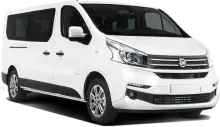


Choose the right car for your trip in Madrid, Spain and book in minutes. Compare trusted rental options, find great daily rates, and secure convenient airport pick-up for your travel dates.
Car rental at Madrid Airport can be truly convenient if you want to depart immediately after landing, your accommodation is not in the city center, you arrive with many bags, or you are traveling with family. In the case of Madrid, however, it is particularly important to consider whether airport pickup is truly the best decision from the first day. If you plan to spend the first few days mainly on city activities and do not want to drive immediately, it may be simpler and more relaxing to arrange a later car pickup. Thus, the decision depends not only on the price but also on when you actually need a car and how important immediate departure is.
The advantage of airport pickup is that you can continue your journey at your own pace immediately after landing. This can be especially useful if you are continuing to the outskirts of Madrid, wish to visit multiple locations on the first day, or want to avoid organizing a separate car pickup after entering the city. With many bags, family, or a late evening arrival, this can provide a real convenience advantage.
In other situations, however, this is not necessarily the best decision. If you only plan city activities in the first few days and would only need the car later, a later pickup can be a more conscious and convenient solution. For MAD, it is therefore worth considering whether airport pickup actually saves time or instead represents an additional burden at the very beginning of the trip.
The location of the pickup point may vary by provider. It could be a counter connected to the terminal, a separate delivery zone, or a pickup requiring a short walk, so it is always worth checking the instructions provided in the booking confirmation in advance. It is not advisable to assume that every offer operates exactly in the same place and with the same process.
For late evening arrivals, it is particularly important to check the conditions under which the selected package releases the car and whether it is necessary to notify them of flight delays. Some offers are more flexible, while for others, late pickup may be subject to separate rules or fees. If you arrive after a long journey, it is advisable to choose a package where the pickup process is clear and not based on the tightest time window.
For car rental, you typically need a valid driver's license, an identity document or passport, and your booking details. Many providers may also request a payment card for pickup or deposit management, but the exact form of this may vary by package. Before booking, it is worth checking whether a card in the driver's name is required and how strict the chosen tariff is regarding pickup conditions.
It also helps if the name in the booking exactly matches the data on the documents. This may seem like a minor detail, yet it can prevent unpleasant on-site coordination.
Many travelers only look at the base price, yet the quality of the conditions is at least as important for airport car rental. The deposit is generally a temporary security or hold, the amount of which may depend on the provider, the car category, and the selected package. The deductible indicates how much cost may remain with you in the event of a damage incident despite the insurance.
The lowest price is not always the best decision. It may happen that a cheaper tariff comes with a higher deposit, stricter conditions, or a less transparent insurance package. If you want a more peaceful start, a more balanced offer where the chance of on-site surprises is smaller is often more worthwhile.
At Madrid Airport, it is not only the cost of the rental car that matters, but also how fast the pickup is, which car category fits the itinerary, what the insurance covers, how large the deposit may be, and how transparent the return conditions are. If you intend to drive longer distances on the first day, different considerations come to the fore than if you are only staying in the city.
| Price | Pickup Time | Car Category | Insurance | Deposit | Return Conditions |
|---|---|---|---|---|---|
| Lower | Can be fast, but with stricter conditions | Smaller or basic category | Basic coverage | Often higher | Precise timing and inspection are important |
| Medium | Generally balanced | Compact or family | More transparent package | Can be more moderate | More flexible, but requires inspection |
| Higher | Often more convenient administration | Larger or better equipped car | Broader coverage | Depends on the conditions | A simpler return process may occur |
Before booking, always check what the price includes, what is considered an extra fee, how late arrivals are handled, and whether you truly need to pick up the car at the airport. The best package is the one that fits your itinerary, not necessarily the one that first appears to be the cheapest.
It is worth thinking about the organization of the return already during booking. Check whether the selected offer truly supports airport return, what timing rules apply to it, and how much time should be allowed for the return, any inspection, and getting to the terminal. On the day of departure, overly tight timing can easily cause unnecessary stress.
Car rental at Madrid Airport works well if you do not only look at the base price, but weigh the entire process of pickup, insurance, deposit, and return together. This makes it easier to choose an offer that truly fits your arrival and the rhythm of your trip.
If you are arriving from the EU, your valid driving license is sufficient. Visitors from other countries should inquire about the need for an international driving permit.
The security deposit amount depends on the car and insurance, but generally ranges from 300-1500 EUR.
Most rental companies accept credit cards, but some may accept cash for the security deposit.
Stop immediately, notify the police and the rental company, and fill out the accident report.
Check the insurance options offered by your credit card, or purchase additional insurance from the rental company.
Valid driver's license, identification (passport or ID card), and credit card.
Most rental companies offer unlimited mileage, but it is advisable to check the contract.
Most highways are toll roads, payment is made with cash or a bank card.
Madrid has many parking garages, but you can also find free parking spaces on the outskirts of the city.
120 km/h on highways, 90 km/h on country roads, 50 km/h in towns.
Yes, but there is usually a surcharge. It is advisable to agree with the rental company in advance.
In Spain, you must drive on the right side of the road, and wearing a seat belt is mandatory.